City of Schwäbisch Gmünd is missing on Numista

10 mensajes • visto 106 veces

Este tema se publicó en el foro en inglés.

Este mensaje tiene como objetivo: solicitar la creación o la modificación de un emisor en el catálogo

Estado: Empezado
Votos a favor: 0
Votos en contra: 1

» Acceso rápido al último mensaje

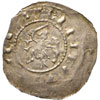
Recently I bought this extremely rare coin, which was probably produced in the year 1621 or 1622:

Now I want to add it on Numista, but the city of Schwäbisch Gmünd is not to be found here yet. So please add this city as part of the Holy Roman Empire (HRE).


The coin was described in 1846 by Christian Binder in his “Württembergische Münz- und Medaillenkunde” on page 436.

https://www.digitale-sammlungen.de/de/view/bsb10741982?page=448

Binder wrote, that this coin could also belong to the city of Giengen, which is not far from Schwäbisch Gmünd and has also an unicorn in its arms. But Giengen is much smaller than Schwäbisch Gmünd, so its more likely it belongs to Schwäbisch Gmünd.

Estado cambiado a empezado (tdziemia, 29 abr 2026, 15:05)

@silvergeek @escoins   If you agree, I can create this new sub-issuer as German States > Schwabisch Gmund, City of   .

Let me know.

Schwäbisch Gmünd was an imperial city with minting rights so it should have one.

Thank you.  The poster suggested putting it in HRE, but it doesn't look like we have used that section for 17th c. coins, hence the German States suggestion.  

It probably is fine to add but I need to do more research first before saying yes and I am busy all day.

No hurry…

That is undoubtedly a very interesting piece! But I don’t think we need to create a new category just for this. Binder is unsure whether it belongs to Gmünd or Gingen, or indeed to either of the two towns at all. In any case, Gmünd had no right to mint coins, and this is the only ‘coin’ that is associated with Gmünd (I do not regard the two medals mentioned by Binder as coins).

He classifies this object as belonging to the ‘Kipper period’ (1622–1623), when there were also many illegal mints producing, amongst other things, fantasy coins. I reckon this is one of those.

But if a category is to be created, then naturally it should be under ‘German Coins’. Why ‘HRE’??

We can always put it to a vote :)


silvergeek

It probably is fine to add but I need to do more research first before saying yes and I am busy all day.

Unfortunately car has some problems so will be as well today sorry

In the German version of Numista the category is called “Heiliges Römisches Reich Deutscher Nation”, that is HRE.

“Fantasy coins” is not the correct term, but many imitations exist, especially of the 17th century. But you can only imitate, what exists. That is, what the counts of Solms-Hohensolms and Leiningen-Westerburg did in this time with their bad copies of coins of Frankfurt, Gronsveld and Zürich.

But with the coin, shown by me here, things are different. No one else than Schwäbisch Gmünd itself could have the idea to produce a coins with the arms of Schwäbisch Gmünd, because in normal times there were no coins of Schwäbisch Gmünd, which could be copied. This imperial city had not the right to produce coins. However, in the years 1621 and 1622 nobody cared about law. In fact 99 % of all German coins in 1621/22 were against the law, because they had not the correct weight, were made out of copper or the emittent had not the right to produce coins at all. They are all listed on Numista anyway, even if they were used only for a short period of time.

It seems to me, that Christian Binder is correct in putting this copper-Pfennig in the Kipper-period. Also the bracteate-like form of this coin points into the years 1621/22. Many coins of these years have this form. After 1622 only very few bracteate-like Pfennig-coins are known, the last one is of Goslar in 1708.

» Política del foro

La zona horaria usada es UTC+2:00.
La hora actual es 23:00.