Mostly fruit and vegetables as my wife and I dislike the store bought versions. Some flowers as well for estectics, pest control, and medicinals. Bottom line is I really like growing stuff.
Nice! I've sometimes had trouble with parsley, and neglected to get seed this year. Now dill on the other hand, grows everywhere, usually where I don't want it!
We have a big garden. Currently picking courgettes, spinach, cucumbers, tomatoes pumpkins, peas, brassicas and lots and lots of runner beans. My wife found one that was hiding inside our bean teepee that was the length of her forearm.
What are courgettes? Do you make pickles with the cucumbers?
I love watching the hummingbirds work the scarlet runner beans. They tolerate my presence, but if I get too close, I get scolded, and even dive-bombed!
Snow's mostly gone, and it's supposed to reach 60 F today, so I'll start pruning the grapes. It usually takes about a week.
What are courgettes? Do you make pickles with the cucumbers?
I love watching the hummingbirds work the scarlet runner beans. They tolerate my presence, but if I get too close, I get scolded, and even dive-bombed!
Snow's mostly gone, and it's supposed to reach 60 F today, so I'll start pruning the grapes. It usually takes about a week.
Courgettes, otherwise known as zucchini. We don't pickle the cucumbers, they get eaten too quickly. We make salads most nights, the boys put them in their sandwiches, and my wife is Indian, so we use them to make raita when we're having Indian food. Our grapes are starting to ripen, but it's a poor season this year. We had a freak marble-sized hail this year around Christmas that absolutely shredded our grapes, damaged all our pears, and killed off numerous other things. We do have feijoas starting to grow, I'm looking forward to eating those in a month or two because they're my absolute favourite fruit. Our corn is almost ready to pick too. Nothing beats a couple of ears of fresh home grown corn
My wife's family also garden, so they usually grow different stuff to us and we swap our excess.
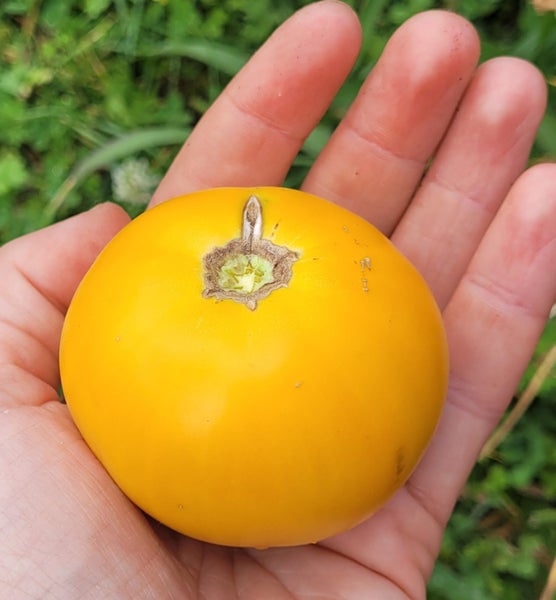
Disappointed to only end up with three tomato seedlings growing from all the yellow tomato seeds I collected last year. Hopefully I can keep them alive on the kitchen windowsill until springtime when I can plant them out…
Wannabe gardener, but (un)fortunately we live in a forest dense area with poor soil, which is good when it rains since we never have problems getting rid of precipitation, but bad since the soil wont hold precipitation for long. Lots of rocks, pebbles and sand below the top soil.
What we grow must be in a greenhouse environment to protect against wildlife entering from the forest (especially deer and wild boar).
We grow mainly beans, tomatoes, cucumbers, zucchini and pumpkins. Salads would be nice, but are labor intense to keep away Iberian slugs.
I commiserate with you regarding deer. The snow's finally gone from the garden, and I find the deer have pulled up a good portion of the garlic I planted last fall. Sometimes I really wish I were a hunter. Spent the morning patching holes in the fence.
I've never seen a wild boar, but can imagine the damage they might be capable of.
This winter we had a long period of snow cover, longer than usual. It's funny to see how the animals roam our plot, leaving their treadmarks all over. Deer like to eat tulips, so they are kept under chicken wire, but deer also eat common ivy (Hedera helix), at which they are most welcome, since the ivy grows rather fast and all over the place.
Fortunately, we haven't had visits by wild boars since we live in a village (lots of dogs), but I know they are rummaging just outside the village, since some of those with plots next to open fields have had their top soil turned over by a gang of wild boars.
BTW, in our area are also fox, badger, moose and theoretically also lynx and wolf.
It's too cold to prune so I'm taking the day off. Yesterday's high was 28F, but with partial sun, it was quite comfortable in the greenhouse, and I started some onions and lettuce.
We had a warm stretch last week, and I dug a few Jerusalem artichokes.
I meant to do it last fall, but the snows came before expected. (as usual) Good thing I did it last week, because they're covered again.
So today, I'll be taking the last of the wormy shriveled apples, and the last of my 10 year old honey to make a small batch of apple mead.
I also hope to do some coin work; starting to go through my mother's hoard of Lincoln cents.
It's warm today, 58F, and the snow's gone for now. Another cold front coming in, and tomorrow's high is supposed to be 25F. These extreme fluctuations in temperature are the main reason I can no longer keep bees. Global warming? I can only say that when we first moved here in 1983, our zone was 3b. It is now 5a.
Tomorrow, I'll be cooking down about 40 lbs of '24 frozen tomatoes into sauce.
Nice! For years I used to grow marigolds with the tomatoes. Not really sure why I stopped. Probably one year I couldn't get seed, and then just got out of the habit. Another reason to save seed. I like the coins in the background.
Thanks. Known here in the UK as ‘Companion Planting’, Marigolds are good for attracting predatory insects, such as hoverflies and l ladybirds, so have become synonymous with organic vegetable production. I think I've now had two marigold seeds germinate in this pot from a small handful of seeds I collected from a garden in Canterbury. They probably got mixed up with the tomato seed compost, but have yet to show any signs of germination in their own pot. They may have been planted a bit too deep.
Coins are from China, Trinidad & Tobago and Guyana. Just got these a few days ago, along with a small pile of Japanese Yen, so still sorting through the dates.
Neilithicman, I'd never heard of feijoas, and had to look it up. I'm rather a bit jealous! They say it prefers zones 8-10, so I'd need to grow it in a pot. I do have a lemon, which has survived 10 years, but has declined to bear fruit 3 years now. Problem is, it sends out prolific blossoms in the middle of winter. I try to do my part pollinating with a Q tip, but bees obviously have something which I lack.
I like the idea of companion plants. I grew tomatoes and marigolds together because that's how my dad grew them.
A couple of questions. Is this growing zone system used outside the US?
If so, what are your various zones? If not, is there anything comparable? I'm always interested in other folk's growing seasons.
I'm not sure that we have anything quite so comparable here in the UK.
We have what is broadly called a maritime climate, which gives us pretty consistent growing conditions throughout, with cold Winters (but not mid-continental freezing cold) and warm Summers (around 30 degrees C - although we seem to be drifting upwards as climate change has an impact), but there are some areas which have their own distinct weather and growing conditions. The north of Scotland (up around Wick) doesn't generally get above 20 degrees C, so growing conditions up there are pretty tough. Whereas in Ayrshire (Ayr/Kilmarnock), there are what appear to be palm trees growing on the seafront (Cordyline australis). This is due to a lack of frost and is possible because of the Gulf Stream, which also creates unusually warm growing conditions in South Wales and along the Southern coastline of England. The Scilly Isles off the coast of Cornwall are particularly blessed with unusually warm winter weather and are well known for early veg and daffodils (Jan/Feb), again curtesy of the Gulf Stream. However, Norfolk and Suffolk in East Anglia are reputed to have the best combination of soil and weather conditions in the country, so veg production is quite widespread. Whereas Somerset, towards Devon and Cornwall in the South West, is known for apples and often associated with cider production.
Here in Kent, we are known as the Garden of England due to the near perfect growing conditions and an historic abundance of fruit and hops (ale production). In West Malling, near Maidstone, the Horticultural & Agricultural Research Institute were responsible for developing some of the worlds first commercial fruit propagation and production techniques. We also have the National Fruit Tree collection in Brogdale, near Faversham, in the north of the county. More recently, we've seen an increase in the numbers of wine producers moving to Kent, attracted by the prospect of higher temperatures and the availability of agricultural land on chalk substrate.
For such a small country, we seem to have a wide range of growing conditions. Hope this is of interest.
Its nearly autumn here, but moving to a place with a yard and a garden and have a friend who is a great gardener. I hope to get something growing soon.
I love coins. Especially silver, gold and anything really old.
Member of the Royal Numismatic Society of New Zealand and the Auckland Numismatic Society
A couple of questions. Is this growing zone system used outside the US?
If so, what are your various zones? If not, is there anything comparable? I'm always interested in other folk's growing seasons.
It's called plant hardiness zones and exists for all continents except Antarctica.
As you can see on the second map, the hardiness zone 7 goes all along the coast of Norway to the North Cape at the very northern tip of the Scandinavian peninsula and the European continent. This is due to the Gulfstream of warm current that originates in the Mexican Gulf and flows via the Atlantic Ocean to the Arctic Sea north of Europe. In Bodø, Norway, which is indicated on the second map, it's possible to grow plants that are mostly common a thousand kilometers further to the south.
To LDC63 and pecunianonolet, this is all new information for me, and well appreciated. I really love grapes, and find it interesting that the zone shiftings have them migrating into the UK. Also, I'm totally floored that there are parts of northern Norway more temperant than where I live!
This morning we had 3F (-16.6C) and I lost yet another rain gauge.
To moneytane, please capitalize on the opportunity. For me it's been a grounding.
Due to the volcanoes on Iceland they have very cheap thermal energy, which makes it possible for them to grow vegetables all year in greenhouses at a low cost. They also have hardiness zone 7 due to the Gulfstream.
10 kinds of broccoli, two cauliflowers, 20 different cabbages, 10 different kale and collard greens, also 4 types of beets and a few early tomatoes for hanging baskets.
.
Jamais l'or n'a perdu la plus petite occasion de se montrer stupide. -Balzac
Wannabe gardener, but (un)fortunately we live in a forest dense area with poor soil, which is good when it rains since we never have problems getting rid of precipitation, but bad since the soil wont hold precipitation for long. Lots of rocks, pebbles and sand below the top soil.
We live in an area with poor soil (mostly dense heavy clay), but you only need 20cm of cultivated soil for most things, so I've just built a whole lot of raised bed gardens and over the last couple of decades of composting, adding manure, green crops, etc, we have great soil now.
Most of our country is Zone 9a to 10b. Auckland where I lived for a long time, would have a usual annual low temperature of 1 - 4c placing it in zone 10a, but parts of Northland were 10b, where 7c may be the lowest annual temperature.
However Christchurch where I live now, has some of the coldest and most bitter winters outside the mountains. We are only plant zone 8b, as most years a low temperature of -7c or so is recorded and many days in winter and spring can have lows of -3 or -4c (25f) especially during a frost. Winter has many clear cool days with lows in the negatives and highs in the high single figures or very low double figures (7c - 12c). The coldest parts of New Zealand are South Island inland areas which can be as low as Zone 7, with Twizel at 550m having annual lows of -12c and Mt Cook at 800m having -15c and thus making it 7a.
Mild coastal areas can be as high as 9b in Dunedin and Banks Peninsula as hills keep out southerly winds. Dunedin city seldom drops below 1c, giving it a 10a some years and 9b most other years, yet Mosgiel and the airport are as cold as Christchurch due to an exposed plain catching southerly winds and frosts! Coastal south Island has a year round growing season like most of the North Island as soil temperatures in winter stay above 7c and in Auckland as warm as 12c. Chch on the other hand has only an 8½ month growing season, with dormancy from early May to late August most years.
I love coins. Especially silver, gold and anything really old.
Member of the Royal Numismatic Society of New Zealand and the Auckland Numismatic Society
Thanks, moneytane. I really love this stuff. I had to look up a New Zealand map to see the areas. ( Not easy on a phone without WiFi). For myself, I simply could not live in an area where I couldn't grow stuff, no matter how challenging.
Mr.Midnight, I thought I had a pretty divers planting, but you blow me right out of the water! I can't even find that many different brassicas, and I have tried, particularly with broccoli. In recent years, fungus, specifically black rot, has been my problem. For cabbage, the variety known as ‘storage #4’ has been the best overall. I'm using the last head tonight to make Cole slaw.
Speaking of coins, this is my mother's hoard of Lincoln cents. It's in response to LDC63's post, and I'm sorry my phone can't (or won't) do the fancy quote thing.
I've started to go through them, and the loose coins are mostly post 1958, whereas the rolled seem to be pre-1958, and are (mostly) identified by decade. This is an onerous task, but I suppose someone has to do it!
I guess my point is that I'm happy to share, and if there's anything you need or could use, I'll try to accommodate.
The rolls seem to be predominantly circulated common dates, Philadelphia mint, but with occasional higher grades in the 1940's. Some Denver's, and less San Francisco.
Raining today, so no pruning. It's good because I can start filling water tanks. Still a danger because this time of year, we still can get temperatures below zeroF. This won't hurt the tanks, but will rupture the spigots.
Nothing up yet in the greenhouse, but it's still early. Once the greenhouse tank is filled, I can keep it above freezing, and start brassicas.
Another cool day, and I'm goofing off again. Temperatures were about freezing all day, and I don't wish to prune (grapes) with gloves.
So here are the totals for rolls 6-10:
1950P (24)
1950D --
1950S (7)
1951P (32)
1951D --
1951S (2)
1952P (24)
1952D --
1952S --
1953P (22)
1953D (45)
1953S (1)
1954P (44)
1954D (10)
1954S (5)
1955P (1)
1955D --
1955S --
Some surprises here. One of my early memories is the family sorting pennies on the living room floor. I don't remember the date, but was sometime after the 1955 DD was discovered. My mother had us look for key dates, and I recall a pile for Indian cents. At one point, my father said" This looks like 1955, but it's a bit blurry". My brother and I thought this was hilarious. But the joke fell flat quickly.
It was 14F (-10C) this morning but supposed to reach 39F, so it's a pruning day.
This thread might be a little silly with the pennies, but I have to do it anyways. I love Houseofham's thread, and perhaps someone will see something needed or wanted.
I found two more 1950's rolls, plus a 1960D, which will go into the post 1958 pile.
1940's will take a while, as there are 16 rolls, more or less.
It was 14F (-10C) this morning but supposed to reach 39F, so it's a pruning day.
This thread might be a little silly with the pennies, but I have to do it anyways. I love Houseofham's thread, and perhaps someone will see something needed or wanted.
I found two more 1950's rolls, plus a 1960D, which will go into the post 1958 pile.
1940's will take a while, as there are 16 rolls, more or less.
You know you can start a new thred for your pennies, and leave this one to gardening.
Members who might like to see and swap pennies are not likely to look for such in a gardening thread.
The first crocuses are up here. I have done some minor clean up in the garden and erected the chicken fence around the strawberry bed. The soil is still frozen a few inches below the surface.
Jamais l'or n'a perdu la plus petite occasion de se montrer stupide. -Balzac
Mild coastal areas can be as high as 9b in Dunedin and Banks Peninsula as hills keep out southerly winds. Dunedin city seldom drops below 1c, giving it a 10a some years and 9b most other years, yet Mosgiel and the airport are as cold as Christchurch due to an exposed plain catching southerly winds and frosts!
Dunedin has lots of microclimates due to topography. I live in one of the hill suburbs, and on a cold winter morning it can be 6 degrees or so at my home, but you drop down into the valley below the inversion layer and it's well below freezing. I've been caught out a couple of times because it's seemed like a reasonable morning and I've ridden my bike, but by the bottom of the hill there's black ice everywhere and I've come a cropper.
I really miss having chickens. When I was a kid, I had an egg route as well as a paper route. I had 40 or so layers, and charged 50 cents a dozen (1963-5). My mother would buy the mash and oyster chips, but I had to pay for it out of egg money. (My parents grew up during the depression).
Regarding the pennies, I'm not sure what to do with them. I might want to offer some to swap, and it's possible I might start a ‘free coins’ post. But I can't do anything until I know what all is here. So this is inventory, and I certainly don't need to post it here, but thought some might be interested.
neilithicman, that's interesting because here, (northern hemisphere) it seems to be the opposite. If temperatures are borderline freezing, we are always snow, whereas the Cherry Valley (NY) is rain. The difference is elevation. I wonder if this is a clockwise-counterclockwise drain thing, but it doesn't make logical sense. Maybe local conditions?
Pruned back my grapes last night. We had freak hailstorms on Christmas day and Boxing day last year that seem to have come right as our grapes were setting fruit, because our whole vine only had 2 tiny bunches of grapes on them. Might be able to make a thimble full of wine with them 😆
I had the first full sized mandarin off our plant yesterday. We got a few mandarins the size of large marbles last year, but this year there were 2 fully grown fruit along with a handful of small ones.
neilithicman, I have two potted dwarf trees, Mr. lemon, (Jack), and Mr. Newton, a White Marseille fig. I'd like to add a feijoa. Would you trade a couple of seeds for Lincoln cents? I also have some pawpaw seeds (asimina triloba). Historically, they don't usually grow here, but with climate change, mine are thriving.
pecunianonolet, your migrating birds are flying north? I expect it must be a Gulf stream phenomenon. I'm 74, and thought I had learned a few things in life. The internet has been both a curse and blessing, and I'm beginning to realize I really don't know anything at all.
pecunianonolet, your migrating birds are flying north? I expect it must be a Gulf stream phenomenon. I'm 74, and thought I had learned a few things in life. The internet has been both a curse and blessing, and I'm beginning to realize I really don't know anything at all.
Yes, we now have early spring and the Common crane (Grus grus) is coming back from the Iberian peninsula (Spain and Portugal), the coast of North Africa and the area around the Nile.
In winter we have the following birds visiting our feeder: Great tit (Parus major), Eurasian blue tit (Parus caeruleus), Marsh tit (Poecile palustris), Common blackbird (Turdus merula), European robin (Erithacus rubecula), Eurasian bullfinch (Pyrrhula pyrrhula), Great spotted woodpecker (Dendrocopos major). A rare visitor is the European greenfinch (Carduelis chloris), but they have turned up the last week or so.
We feed the birds from first frost to last frost, nothing grows with frost and insects hide when frosty. We feed with pork lard (skin of pig), sunflower seeds (peeled or unpeeled), peeled peanuts and those ready made round seed birdfeeds based on lard. If we have any spoiled fruit, like apples, the blackbirds go crazy for them.
When the ground is covered by snow we make a clearing for the blackbirds and robins and feed with rolled oats (this winter also with bulgur, since we made a wrong purchase of those). Blackbirds only come to feed when there is no uncovered earth to roam.
In winter there are also Eurasian magpie (Pica pica), Carrion crow (Corvus corone) and Hooded crow (Corvus corone cornix). The bird feeder construction is an orb of strings with a cylindrical container in the middle with four feeding holes and sitting pins for the birds. It's not possible for these three larger birds to enter the feeding orb, so we feed them in another place, but only with leftovers from the kitchen (fish, meat, dairy) and only what we wont eat ourselves. Many times also spoiled food, the birds don't care. This winter we also served them 7-8 mice that we found in the traps.
neilithicman, I have two potted dwarf trees, Mr. lemon, (Jack), and Mr. Newton, a White Marseille fig. I'd like to add a feijoa. Would you trade a couple of seeds for Lincoln cents? I also have some pawpaw seeds (asimina triloba). Historically, they don't usually grow here, but with climate change, mine are thriving.
I don't think Feijoas grow true to type if you grow from seed. They also need a pollinator to get any fruit.
My wife is growing a fig here as well. It's usually too cold for them, but she started it inside, and then I made a mini greenhouse for it with some clear polythene and a few stakes.
pecunianonolet, I'm really sorry for having a ‘senior’ moment. Of course birds are migrating north now. I might have been thinking southern hemisphere. At least it makes for a good excuse.
It's grand you're feeding birds, watching, and keeping track. We used to have two feeders over the winter. Not sure why I stopped. It could be the squirrels proved themselves smarter than me.
Your birds are similar to ours, with common names; tits (we call them titmice), crows, finches, blackbirds, woodpeckers, etc. I expect the same genius, different species.
We have one bird, the Cedar Waxwing, as cunning as a cat. They would post one bird as a lookout sentry to warn the others when I was approaching. I've stopped trying to grow strawberries.
Since we don't have any pets, feeding the birds is my wife's only real hobby - and of course gardening.
Yeah, the squirrels are pesky, but funny. One year we had one visiting, most likely a slender juvenile, that could get into the orb feeder and extract what it wanted. It was quite annoyed by the wires and tried to chew them apart without success. It was funny to see it's one hindleg sticking out in the air while at work.
Funny about the cunning bird you have. Our birds are also quite clever. We have birds that begin to chirp when we come out of the house during the winter season, even though they rarely chirp (spend extra energy) during winter. It seems they are following us and are “speaking” to us while we are outdoors. Same thing when we fill the feeder. One or two of the birds don't even bother to fly away when we fill the feeder, but reluctantly do if we come to close for comfort. Some of them make warning noises when a stray cat is hiding in the bushes.
Yes, squirrels. I'm ashamed that I have shot several over the years. I can tolerate bird feeder and other deprecations. But the Filbert is my favorite nut, and I have carefully nurtured three trees for 30 years.
When the squirrels first discovered them, it was a constant warfare with me patrolling with a .22 and occasionally picking one off. They quickly became wily.
It all culminated last fall. The filberts mature the first week of September. I went to investigate early August, and found all three trees had been stripped. Nothing left but husks. Through the dismay, came the thought that obviously they need them more than me. I can no longer meet squirrels with animosity.
I've had similar experiences with birds. I think they are smarter than most will acknowledge. When I was was a kid, my grandfather taught me how to feed chickadees out of hand. I couldn't believe it when they actually did. Haven't tried to do that for probably 60 years
It seems this season of feeding the birds comes to an end the coming week, since there is no forecast of frost.
The birds have become more territorial now, which can be heard by the loud chirping and tweeting ("this is my spot and I'll defend it!"). Some of the species are also aggressively chasing their rivals.
My new garden is working in my flat, dug out an overgrown garden from 2020 and have redug it for roots from dead trees, added compost, will put in pellets today and add a layer of peastraw. Also bought some potted colour to tide me over to spring (Petunias, Cyclamens etc) and got it looking nice.
Interesting you spauldingph are having late frosts and cold snaps, opposite here, after a dull summer - we are having some autumn gold, 2 sunny days of 24c (75f) temperatures and lows of over 12c. Great time to lay mulch.
This is the garden and yard before I have done anything - facing west. As we are in southern hemispher, sun is at north - right side of photos and as you can see the autumn/winter sun keeps the wall in shade and the far wall gets morning sun only. Second shot is basically 2pm on a autumn day, already you can see the low sun we have here.
Bird wise, not many, mostly sparrows and thrushes but occasionally we get a few blackbirds. Very different from when I was in Auckland with tuis (Parson birds), and even Finches, budgies that came from Australia.
I love coins. Especially silver, gold and anything really old.
Member of the Royal Numismatic Society of New Zealand and the Auckland Numismatic Society
Thanks, moneytane. I really love this stuff. I had to look up a New Zealand map to see the areas. ( Not easy on a phone without WiFi). For myself, I simply could not live in an area where I couldn't grow stuff, no matter how challenging.
Yes I was quite fascinated too and looked at a hardiness map of the USA and noticed even Zone 8 is usual in Seattle and coastal Oregon, yet on the East Coast, its equivalent to North Carolina and the Memphis region due to the very cold winters you have! Those places are absolute ovens in summer, but their winters are worse than ours!
I love coins. Especially silver, gold and anything really old.
Member of the Royal Numismatic Society of New Zealand and the Auckland Numismatic Society
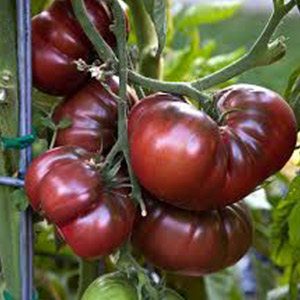
I'm picking up some viper's bugloss seeds to put in my front garden around my lemon and Feijoa trees to attract the bees. The same guy also has some interesting looking heirloom tomato seeds that I might get to have a go growing. The plain tomatoes from the supermarket are so boring. My wife grows a nice variety called “black krim” They're a beautiful big and tasty tomato. One slice of the biggest one is enough to cover your piece of bread for a sandwich.
I might try this one, called “Olga's round golden chicken”
Those are beautiful and if you can grow them in Dunners, we can grow them here in Christchurch. Bring on spring!!
I love coins. Especially silver, gold and anything really old.
Member of the Royal Numismatic Society of New Zealand and the Auckland Numismatic Society
After a mow, things are settling down. Haven't planted anything beyond potted colour and 2 lavender plants, due to our city having an 8.5 month growing season and we are well into month 8 of it.
This is as high (35 - 37 degrees) as the sun gets this time of the year and it won't be this high again until the end of August.
I love coins. Especially silver, gold and anything really old.
Member of the Royal Numismatic Society of New Zealand and the Auckland Numismatic Society
Moneytane, I'm jealous. I'm lucky if I can squeeze out 100 days.
Mr. Midnight, I like the goats, and I looks like you have really good fencing. I know they can be little Houdinis.
Wow, thats basically June to September only, where do you live? Must be on top of the Airdoniacks or at 45 degrees north just south of Salaberry de Villaycourt - that is an incredibly short growing season.
Meanwhile for NZ, Christchurch is the only city with less than year round growing season, even Dunedin city is mild enough for year round growth (Not Mosgiel/Taieri or high locations). When I lived in Auckland, we had full year growth and my rose only stopped blooming in August.
I love coins. Especially silver, gold and anything really old.
Member of the Royal Numismatic Society of New Zealand and the Auckland Numismatic Society
I live 2 hours from Old Forge, NY, which has the dubious honor of having the lowest recorded temperature in the Northeast at -52. Here at 42.78 north latitude, 1700 feet elevation, the coldest I've seen is -40.
In the spring, every third year or so we'll get a killing frost mid to late May, and I've learned the hard way to watch the forecast closely before setting anything out.
In the fall, we expect first killing frost mid September, but some years can make it into October. Other years, the season ends early September.
I love Lima beans, but have given up trying to grow them. Soy beans on the other hand do well here. Still and all, we live in a gorgeous area, and I wouldn't trade it for anywhere. (except maybe New Zealand, which sounds mighty fine).
1700 feet (520m in our money) is pretty high up, your latitude is a long way from Canada border. Are you near Beekman (I watched a show years ago about a gay couple who had a farm there and it was hilarious, it was Sharon Springs NY I think and they had great summers, colourful autumns and unbelievably cold snowy winters).
My guess is 42.78 degrees is 42.47 our money and -40f is -40c and -52f is -47c. Those are extremely cold temperatures. What is shocking is you are closer to the equator than me and Neil. I am 43.31 south (43.52 your money) although just 3 metres (10 feet) above sea level and the coldest temperature we had last year was -5.2c. Yesterday night was one of our coldest since last year with it dropping down to 2c (36f) and my begonias don't look happy. Today we are expecting 20c at least 21c tomorrow, but a cold change with highs of 12c and lows of 4c is coming. That is bitterly cold for us.
Yet I can see you must have really nice summers if you can grow lima beans, our summers are very cold by US standards and even North Dakota and North Maine have better summers than us.
I love coins. Especially silver, gold and anything really old.
Member of the Royal Numismatic Society of New Zealand and the Auckland Numismatic Society
I picked the first pick off our NZ cranberry (Chilean guava) bush today. I just picked the ones off the outside since they're the ripest. There's about ⅔ left on the bush, but I still got a huge mixing bowl full of them. I'll probably make some jelly and cordial out of them.
You nailed it, Moneytane. I live in the hills of Cherry Valley near Center Valley. Sharon Springs is the closest town even though it's a different county.
Pretty much everyone in the area know the Beekman Boys, Josh and Brent. They are major contributors to the community. I believe they still have a goat dairy business on their farm.
You nailed it, Moneytane. I live in the hills of Cherry Valley near Center Valley. Sharon Springs is the closest town even though it's a different county.
Pretty much everyone in the area know the Beekman Boys, Josh and Brent. They are major contributors to the community. I believe they still have a goat dairy business on their farm.
That's great, that programme had my late partner and I in tears, lines like the horny goat stuck in the pen with Josh and he said “15 seconds ever heard of f****lay” and when they were getting married and Brent got called a Bridezilla for wanting a bridge. The funniest was one where they were assembling boxes of candles and someone was getting the order wrong “This is not rocket science and I know what rocket science is, its putting the right candle in the right hole”. I am glad they are still together.
That whole area just looks beautiful and proves there is so much more to the empire state than Noo Yoik. And you have a beautiful spring and summer coming up!
I love coins. Especially silver, gold and anything really old.
Member of the Royal Numismatic Society of New Zealand and the Auckland Numismatic Society
neilithicman, with ‘guava’ in the species name, can I assume these aren't really tart like our north American cranberries?
No, I think they're referred to as cranberries because they're around the same size, colour and shape as a cranberry. But they're very sweet. The have an amazing fragrance when they're ripe. You walk past a bush or ripe berries and it smells like you're walking past a jam factory.
Our area is both very conservative and economically depressed; Maga country.
But ironically, we seem to be mostly free of the racism, homophobia, and xenophobia, often found in rural America.
My feeling is that the maga movement is largely a pendulum swing, influenced by media propaganda. Here, at least, people are slowly coming to their senses.
I probably shouldn't have brought this up, as I would prefer this thread be unsullied by politics. My greenhouse and garden are the perfect antidote to political stress.
Today should have been the great garden clean-up day, so the first thing I wanted to do was to make the trailer ready after winter hibernation, but, one of the tires had a defect valve and was completely flat. Fortunately, I could get the tire off with a little help from the neighbour. The nearest garage with drop-in on Saturdays is approximately 60 km away, so two hours later and the fixed tire was mounted and trailer ready for loads of leaves, twigs, branches and whatever the latest storm left in our garden.
Our area is both very conservative and economically depressed; Maga country.
But ironically, we seem to be mostly free of the racism, homophobia, and xenophobia, often found in rural America.
My feeling is that the maga movement is largely a pendulum swing, influenced by media propaganda. Here, at least, people are slowly coming to their senses.
I probably shouldn't have brought this up, as I would prefer this thread be unsullied by politics. My greenhouse and garden are the perfect antidote to political stress.
Well I knew it must be tolerant as Josh and Brent are pretty out there, and that show also had several other gay and lesbian couples living nearby and all running businesses and contributing to the community. Although that show is from the more liberal Obama era (Yes I think the USA was a lot better around 2011/12 for toleration).
Plus I though the more MAGA parts of your country were generally south of the Mason Dixon line, although I know there's a rust belt there too. But like you, more intereted in the flora or your regions and how gardening and horticulture works there. The sudden shift in seasons there must really keep you all on your toes. You need to protect the ground for winter and ensure the summer is utilised fully as its your only window for growing anything.
I mean I doubt some peastraw dumped on your beds in October would last one of your winters, like it does here.
I love coins. Especially silver, gold and anything really old.
Member of the Royal Numismatic Society of New Zealand and the Auckland Numismatic Society
My seeds arrived yesterday. I'm looking forward to getting the Viper's bugloss in. The bees just adore them. I also picked up some miniature dahlia seeds, and the tomato seeds. We'll have to wait a few months to plant the tomatoes and dahlias. The Bugloss can go in the garden now.
It's snowing now, but I don't expect it to accumulate. After 5 days of warm weather, the plum blossoms are coming out 2 weeks early.
The forecast is calling for a low of 21F (-6.1C) next week, so I'm not expecting any plums this year.
I'm using the time to finish catagoging Mother's hoard. There are about 1800 wheaties, and I still can't decide what to do with them. My fondest wish is to offer them to collectors for free. There are, of course folks out there who would take advantage. I welcome any advice.
I looked up viper's bugloss, as I've never heard of it. It seems that in Western states in the US, Washington and Idaho, it is considered an invasive species.
Any plant which encourages bees cannot be labeled as ‘invasive’ by any stretch of the imagination.
Estado cambiado a resuelto(spauldingph, 19 abr 2026, 18:02)
Estado cambiado a abierto(spauldingph, 19 abr 2026, 18:02)
I looked up viper's bugloss, as I've never heard of it. It seems that in Western states in the US, Washington and Idaho, it is considered an invasive species.
Any plant which encourages bees cannot be labeled as ‘invasive’ by any stretch of the imagination.
I think it depends on how fast it grows and spreads. When the English colonised New Zealand, they brought gorse plants over to make hedges, unfortunately NZ has the ideal conditions for gorse growth, and now it's a noxious weed over here. The viper's bugloss may grow slower here than it does in the western states.
I recently bought this huge Dark Star Alocasia plant, but one of it's leave creased. I don't know any other way to heal it. Is the plant ok like this in the pictures?
I don't know alocasia, but it doesn't look like the plant is overly stressed. Look up everything you can. I would suggest giving it full sun in small doses. If it is a shade plant, don't overdo it. But if it is fungal, sun is a good remedy. For myself, I hate spraying, and only resort to it when all else fails.
Here in the UK we have large areas of Rhododendron ponticum, which has a vivid purple flower and looks beautiful, but is highly invasive in our climate with no natural predatory insects and cannot be eaten by grazing animals. It is therefore now illegal here to plant it in areas where it can escape into the wild.
I introduced pulmonaria (lungwort) here 35 years ago. It has thrived, and has become a nitch crop, to the point where it grows everywhere. My neighbor considers it to be invasive.
But it is the earliest spring flower which the bees can work. Bees here are definitely in trouble, and any plant which helps should be encouraged.
My feeling is that Nature is smarter than most of us, and is better able to determine which plants should grow where.
The main difficulty with foreign invasive species, such as Rhododendrons, is that they force out native species. It's thought that R. ponticum specifically produces a kind of chemical suppressant that prevents other plants from growing under their canopies, thus preventing competition. The whole ecological web is therefore impacted. They may well produce flowers for some insects to feed upon, such as bees (although the widespread colonies I've dealt previously with didn't seem to be especially buzzing with life), but can destroy much of the native habitat for other indigenous creatures.
I looked up viper's bugloss, as I've never heard of it. It seems that in Western states in the US, Washington and Idaho, it is considered an invasive species.
Any plant which encourages bees cannot be labeled as ‘invasive’ by any stretch of the imagination.
I think it depends on how fast it grows and spreads. When the English colonised New Zealand, they brought gorse plants over to make hedges, unfortunately NZ has the ideal conditions for gorse growth, and now it's a noxious weed over here. The viper's bugloss may grow slower here than it does in the western states.
Totally true, many English species of plant became pest plants here, mainly as New Zealand has a similar climate to the UK (Especially the South Island - Christchurch and London have identical summer temperatures and our winters are only 2c warmer) so English oaks, chestnuts, daffodils, snowpeas, bluebells, roses, rhodos, camelias all grow here, but more vigorously in Auckland and the North (Auckland is exactly like London +5c). You know it when all the “Palms” in the UK at beach resorts and even Scotland are actually New Zealand cabbage palms which are one of the few species of Temperate palm.
NZ native grasses were quickly replaced by English lawn species like Fescue. Not every British introduction was great though, rabbits are an ongoing nuisance here, same with stoats, weasels, cats, large rats etc - all threaten our flightless birds. Climate wise Auckland is like San Francisco with a lot more rain, Christchurch is like London and Dunedin a mix of Vancouver and Edinburgh. Basically mediocre summers, mild winters and rain virtually anytime, but apart from Dunedin and the deep south, its a bit sunnier overall than the UK (Chch north around 2000 - 2400 hours of sun annually).
Meanwhile we have had a cold snap and temperatures have dropped from high teens/low twenties to barely double figures (10 - 12c).
I love coins. Especially silver, gold and anything really old.
Member of the Royal Numismatic Society of New Zealand and the Auckland Numismatic Society
LDC63, I fully appreciate and agree with your viewpoint. We have a growing patch of Bishop weed near the garden which we can't help but pull out a few as we walk by. One neighbor has a personal vendetta against multiflora rose, and has resorted to herbicides.
One could say that every plant here could have been called invasive at some point, whether they came here 10, or 10,000 years ago.
In terms of ecology, many refer to human interaction as ‘unnatural’. But we are an integral part of the equation, and really can't be dismissed, even though we are ourselves an invasive species.
Long term, Mother Nature, or Gaia has the final say.
LDC63, I fully appreciate and agree with your viewpoint. We have a growing patch of Bishop weed near the garden which we can't help but pull out a few as we walk by. One neighbor has a personal vendetta against multiflora rose, and has resorted to herbicides.
One could say that every plant here could have been called invasive at some point, whether they came here 10, or 10,000 years ago.
In terms of ecology, many refer to human interaction as ‘unnatural’. But we are an integral part of the equation, and really can't be dismissed, even though we are ourselves an invasive species.
Long term, Mother Nature, or Gaia has the final say.
Exactly, a few years ago when I lived in Auckland, we got some professional gardeners in to tame a wild upper garden when my partner got very sick and I couldn't do it due to work - She said “A weed is merely a plant in the wrong place”, made a lot of sense.
I love coins. Especially silver, gold and anything really old.
Member of the Royal Numismatic Society of New Zealand and the Auckland Numismatic Society
There's a programme in our area to eradicate sycamore trees and willow trees which force out the native trees. Willows are especially bad because they take over waterways, and if you chop them down, they just grow again unless you thoroughly poison the stump.
Thanks for the information Moneytane. I find this all fascinating especially coming first hand instead of AI generated stuff.
I'm curious about your kiwis. Do you see them at all, or are they strictly in protected areas?
They are nocturnal birds, so in reality you only see them in zoos, bird reserves that have kiwi houses and in places like Fiordland. They are endangered due to being flightless and vulnerable to attacks by mice, rats, weasels and stoats.
Most interestingly I have seen less than 10 in my life - all in Kiwi Houses at zoos, Whangarei Reserve and Museum and Orana Park, Christchurch. Its a very old bird like all of ours. Kiwis are believed to be around 150 million years old going back to Aperteryx.
The main kiwis we all see are here
🤣
Finally, they are easily the cutest birds I have ever seen in my whole life!
I love coins. Especially silver, gold and anything really old.
Member of the Royal Numismatic Society of New Zealand and the Auckland Numismatic Society
Thanks for the coin photos. I'm fairly new to coins and don't have any NZ. My passion has been stamps since I was a kid. It turns out that I don't have that many NZ either!
Those two are the 1935 1d Kiwi definitive and the 1938/47 3/- KGVI definitive, that stamp is worth a few $ and was the highest face value in the set. My NZ stamp collection is quite impressive and between 2005 and 2019 I was all about stamps, but during Covid the stamp clubs all went into hiatus and coins took over.
Back in the garden 3 days of cold showery weather (In NZ we have a wind called a Southerly that brings chilly and wet winds from the Southern Ocean which sees temperatures drop to single figures where I am (40s F) and low doubles in the north (50s F). Yesterday was the first day where no where in the country was warmer than the teens (68f) in the whole country, this year. The rain has made short work of the pea straw and some of the flowers have shrivelled a bit. A lot more leaves have come down and we have had 6 or 7c rain all night (43 f). In winter, southerlies can turn the rain into snow.
I love coins. Especially silver, gold and anything really old.
Member of the Royal Numismatic Society of New Zealand and the Auckland Numismatic Society